
Rough walls transformed into smooth, paintable surfaces. Proper skimming throughout Salvington — surfaces assessed correctly, prepared thoroughly, finished to standards that show under any light.
The multi-quote model treats skimming like a commodity when it’s actually craftsmanship. Price comparison ignores skill differences that show up in the finish. Direct contact with a quality-focused plasterer gets better walls, not just cheaper quotes.
Our system prioritises quality over quantity.
Our approach is straightforward: one plasterer covers skimming work across Salvington. Direct contact means honest pricing — you speak to the person who’ll attend your home and deliver quality finishes without unnecessary complications.
Quality wall skimming eliminates surface problems that make decorating difficult. Cracks, bumps, patches, and uneven textures disappear beneath professionally applied skim coats, leaving smooth walls that take any finish beautifully. Experienced plasterers work methodically — proper prep, consistent application, clean finishing — delivering surfaces that transform how your rooms look and feel.
Have a look below at what’s included in our skimming service. If it covers your situation, get in touch and we’ll respond fast. If not, that’s absolutely fine — thanks for your time.

Professional wall plastering delivers smooth, lasting finishes that transform your living spaces. Rough or damaged surfaces get properly prepared and coated with quality skim plaster, creating flat walls ready for any decorative treatment. Attention to detail around light switches, corners, and edges ensures professional results throughout — surfaces that look right and perform well for years.
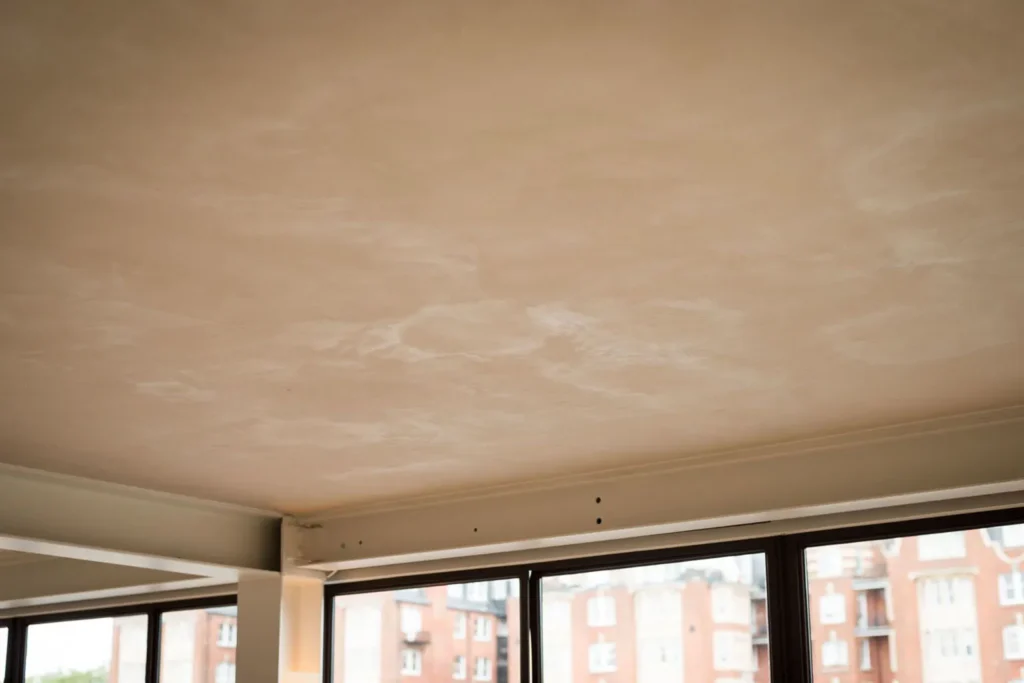
Re-skimming ceilings eliminates textured patterns that date properties and make decorating difficult. Stipple, swirl, bark, and other Artex finishes vanish beneath professional skim coats, leaving smooth surfaces ready for paint. Skilled ceiling work requires experience — working overhead, managing drying times, avoiding joins — delivering flat finishes that transform room appearances.

Professional patch plastering fixes localised damage without the disruption of full re-skimming. Impact holes, cable chases, removed fixtures, and cracked sections respond to targeted repair work that blends invisibly with existing surfaces. Experienced plasterers match textures, feather edges, and finish seamlessly — patches that paint over perfectly and stay hidden permanently.
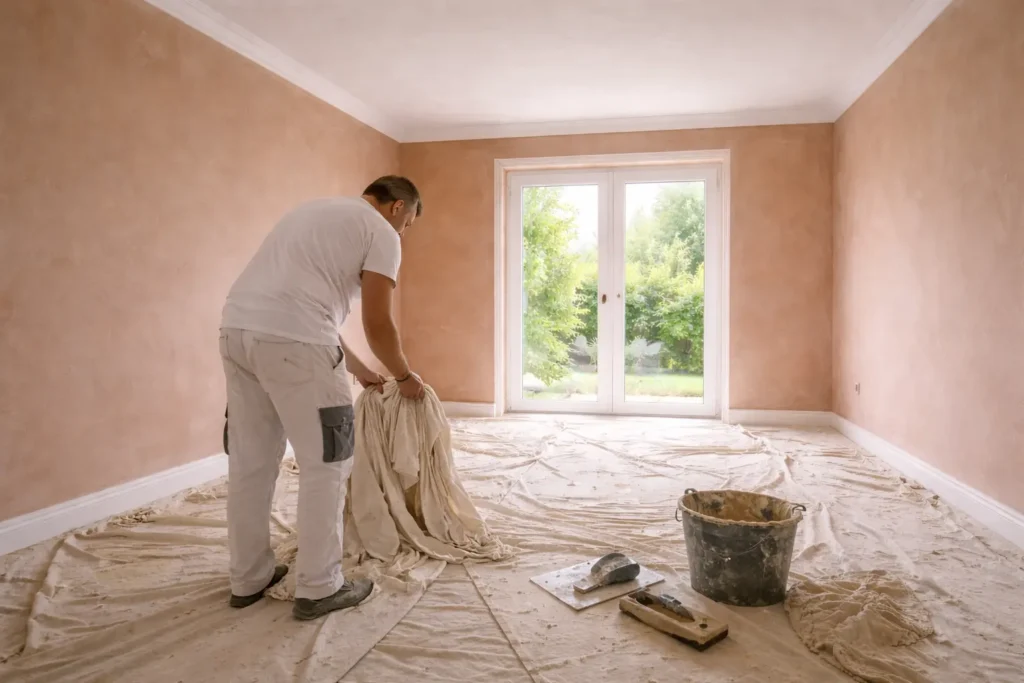
Finishing new plasterboard requires specialist technique that creates invisible joints and smooth surfaces. Extensions, conversions, and renovation projects need professional taping and skim coating to transform raw boards into decoration-ready walls. Experienced plasterers ensure seamless results — no visible joins, no cracking at corners, just flawless finishes throughout.
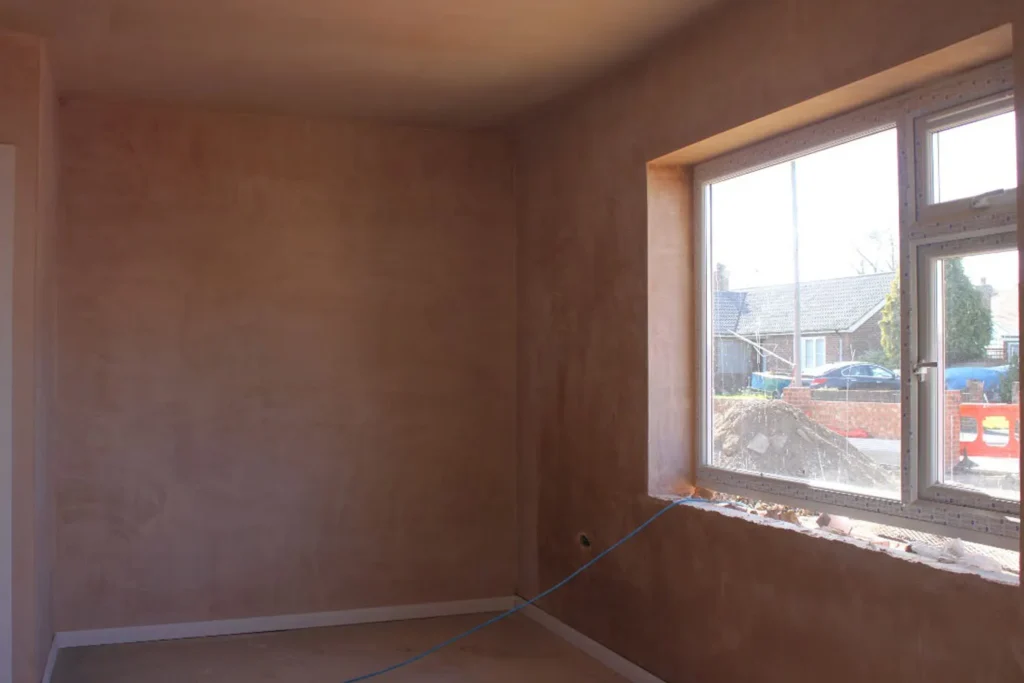
Complete re-plastering transforms whole rooms with consistent smooth surfaces from every angle. Full wall and ceiling skimming ensures unified finishes throughout — same quality everywhere, seamless results, professional standards. Skilled tradesmen work efficiently, delivering even coverage that refreshes entire spaces and simplifies decorating.
Two plasterers can quote the same job — one leaves glass, the other leaves waves. Here’s what drives the difference in our work throughout Salvington.
Properties around Clapham Common Worthing were mostly built pre-war — lime plaster, lath ceilings, solid walls. Near St Marys Church Clapham the fifties estates dominate. Toward Chesswood Middle School it’s newer construction. Each era across Salvington needs different preparation approaches.
Single feature walls, whole room transformations, awkward ceiling repairs, invisible patch blending — each job type brings its own challenges. Consistent quality across Salvington comes from adapting methods to match conditions, not applying the same approach everywhere.
Most Salvington properties are victorian terraced houses or inter-war semi-detached houses with 2.6m to 2.7m (8.5ft – 8.9ft) ceilings. Working exclusively on this housing type builds specific knowledge — where walls tend to blow, how surfaces typically behave, what preparation delivers lasting results.
Calls and forms go straight to your area’s tradesman — no filtering through people who’ve never held a trowel. You get honest conversation about wall types, preparation needs, and what quality skimming actually requires.
They’ll ask about your walls — what’s on them, what state they’re in, how many rooms need work. This shapes the assessment visit, which gets arranged for a mutually convenient time to inspect surfaces thoroughly before providing detailed costs.
Assessment means evaluating walls properly — adhesion testing, suction checking, damp investigation, previous repair assessment. The plasterer explains preparation requirements in plain English. Quotes based on real conditions, not phone descriptions.
Plastering gets completed properly — correct preparation, consistent application, careful finishing. Protection covers work areas throughout, and thorough tidying follows. Clear guidance covers drying stages, when emulsion misting should happen, and realistic decoration timelines.
Walls and plastering raise plenty of questions — how long it takes, what preparation involves, when you can paint. Here’s the straight answers to what most people ask about skimming.
Timing depends on room size, surface condition, and preparation needs. A standard bedroom with sound walls typically takes one day — preparation morning, first coat midday, second coat afternoon. Rooms needing extensive prep work or multiple problem areas take longer. Ceilings add time. You’ll get accurate duration estimates after wall assessment.
Some walls skim over existing surfaces, others need stripping — condition determines approach. Solid, well-attached plaster just needs keying. Blown areas, failed coats, or excessive thickness require removal. Assessment identifies what’s needed rather than guessing.
Skim finishing creates smooth walls using thin coats — 2-3mm typically — over existing surfaces. Plastering encompasses heavier applications: base coats on masonry, render work, depth building. Most domestic re-finishing involves skimming existing plaster rather than full replastering.
Paint type and thickness determine preparation. Matt emulsion over good plaster receives skim after proper keying. Gloss, silk, or heavy paint buildup causes bonding issues — typically requiring stripping or specialist treatment. Assessment reveals what your walls need.
New plaster requires proper drying — typically 2-4 days minimum, longer for full curing. Mist coat first using watered-down emulsion to seal surfaces correctly. Decorating too early risks adhesion failures, peeling, and blistering.
Fill out the form or call now to speak directly to the plasterer covering your area. No call centres, no delays – just clear answers and fast action.
Your details are safe – we only use them to respond to your enquiry
Skimming work extends across the complete Salvington region. Local expertise in housing stock characteristics, wall behaviours, and preparation methods that deliver proper results on these surfaces.