
Walls that take paint properly start with proper skimming. Flat, smooth finishes across Pollokshields — preparation done right, coats applied evenly, surfaces ready for whatever decoration you’re planning.
Posting a skimming job on Checkatrade sounds efficient until you’re drowning in callbacks and conflicting quotes. One says £400, another says £800 — same room, same walls. Direct contact with a trusted local plasterer removes the confusion.
We’ve simplified the whole process.
Our system is straightforward: one trusted plasterer handles skimming work across Pollokshields. When you call or submit a form, it goes straight to them — the same person who’ll turn up and transform your walls.
Professional plastering encompasses various skimming scenarios. Patch repairs blending into existing surfaces need precision, full re-skims need consistency, and each job benefits from understanding the surface conditions before work begins.
See if what we offer below matches the finish you’re looking for. If it does, contact us directly. If it doesn’t, no problem at all — appreciate you checking us out.

Smooth wall skimming transforms problem surfaces into professional-quality finishes ready for decoration. Cracks, bumps, old repairs, and textured plaster all disappear beneath expertly applied skim coats. Experienced plasterers prepare surfaces properly, work methodically through each wall, and deliver consistent results — flat, smooth finishes that make decorating effortless and results impressive.
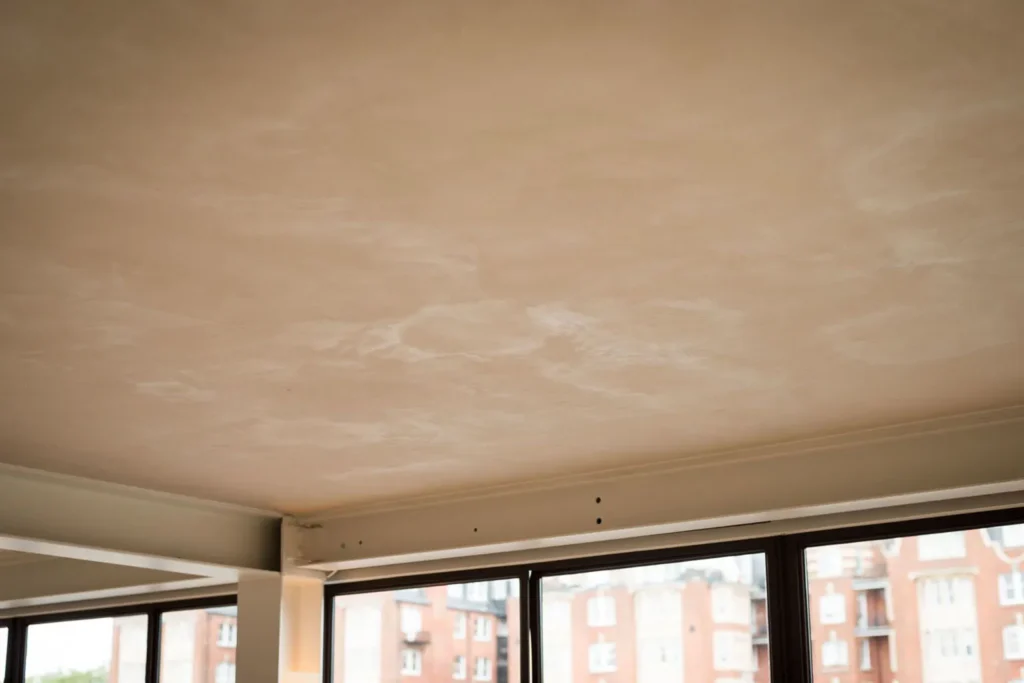
Professional ceiling finishes start with expert skimming that transforms rough or textured surfaces. Outdated Artex, damaged plaster, and uneven areas disappear beneath smooth skim coats applied by skilled tradesmen. Working overhead requires specific technique and experience — delivering flat ceilings that reflect light evenly and make rooms feel fresh.

Professional patch skimming restores localised damage without full room replastering. Impact holes, cable chases, and cracked sections respond to targeted repairs that blend perfectly with surrounding plaster. Experienced tradesmen match textures and finishes exactly — patches that disappear completely and save the cost of larger-scale work.
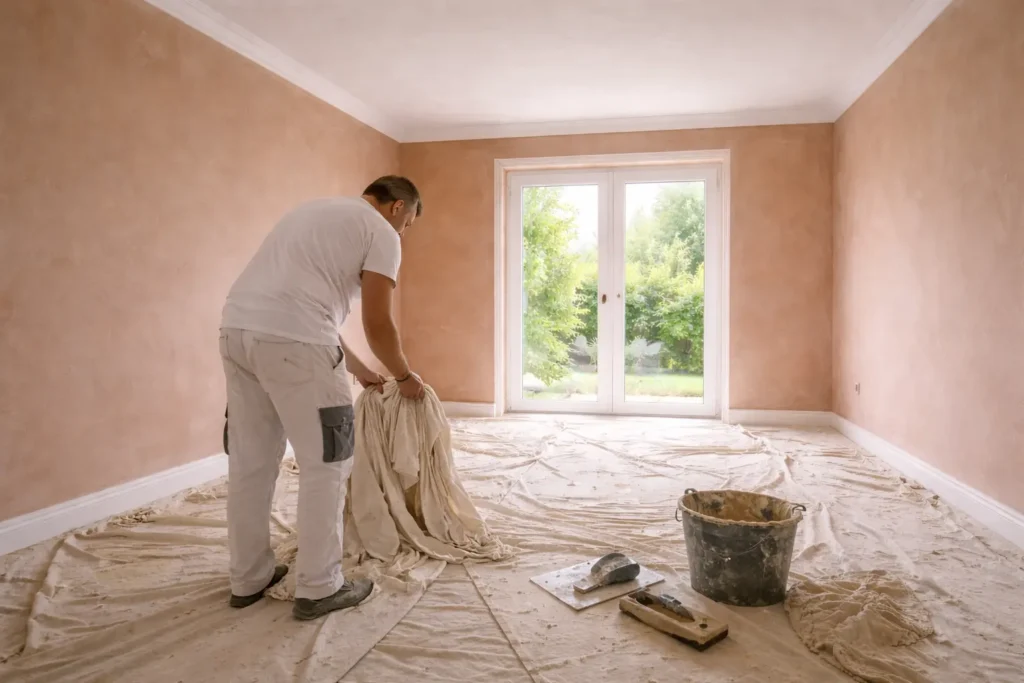
Plasterboard skim finishing delivers new-build quality on extension walls, conversion ceilings, and renovation projects. Professional joint treatment and smooth skim coats create seamless surfaces that transform raw construction into finished living spaces. Quality workmanship ensures lasting results — walls ready for decoration and built to stay that way.
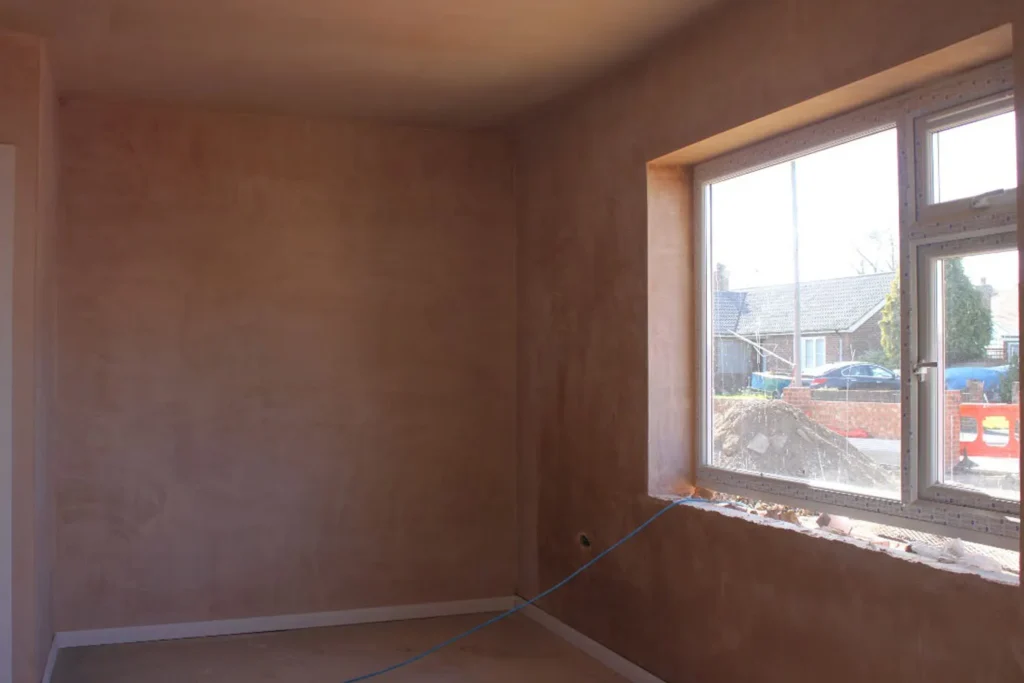
Full room skimming creates fresh, unified spaces with consistent smooth finishes across all surfaces. Comprehensive coverage ensures walls and ceilings match perfectly — no texture variations, no patchy areas, just seamless results throughout. Professional plasterers transform rooms completely, delivering even quality that makes decorating effortless.
Anyone can spread plaster — fewer can leave it properly flat. Here’s what separates our skimming work from average results across Pollokshields.
Properties near Pollokshields East Station tend toward solid nine-inch walls with lime plaster. Toward Maxwell Park you hit more cavity construction with gypsum. Out near Shields Road the estates are mostly board. Knowing Pollokshields’s building history makes preparation instinctive.
Some walls need PVA, some need bonding, some just need a wipe down. Ceilings that look sound can be ready to delaminate. We check everything first across Pollokshields — proper assessment prevents the callbacks that rushed preparation causes.
Pollokshields housing runs mostly victorian villas and tenement flats, ceilings around 2.7m to 3.2m (8.9ft – 10.5ft). Those property types share characteristics — similar wall construction, common problem areas, predictable preparation needs. Experience on this specific stock makes assessment faster and more accurate.
When you get in touch, the tradesman answers — same person who’ll assess your surfaces and apply the skim coats. Conversations about wall condition, preparation needs, and finishing standards happen with someone qualified to give proper answers.
First conversation focuses on understanding your walls — what’s on them now, what finish you’re after, how many rooms need attention. Based on that, assessment gets arranged at a time that suits. No pressure, no commitment until you’ve had surfaces checked properly and received clear pricing.
Wall inspection includes hands-on assessment — tapping hollow sections, testing suction, checking for blown areas, noting repair history. Preparation needs get explained simply. Pricing reflects genuine surface condition found on site.
Jobs get completed methodically — preparation stages, plaster application, finishing work. Dust sheets protect surroundings throughout. Thorough cleanup happens after. You receive specific advice about drying periods, emulsion misting, and when surfaces are ready for decorating.
Before booking skimming work, most people want to know the same things — preparation, timing, costs, drying. Here’s the honest detail on what to expect.
Room timing reflects preparation requirements more than square metreage. A bedroom with sound walls skims in a day. Add extensive prep, ceiling work, or surface problems, and timing extends. Assessment identifies what your walls actually need, allowing accurate scheduling.
Not always — it depends on existing surface condition. Sound plaster that’s firmly attached just needs keying and coating. Blown plaster that sounds hollow when tapped needs removing. Multiple previous coats building thickness sometimes require stripping. Assessment determines what your specific walls need — some skim straight over, others need work first.
Skim finishing creates smooth walls using thin coats — 2-3mm typically — over existing surfaces. Plastering encompasses heavier applications: base coats on masonry, render work, depth building. Most domestic re-finishing involves skimming existing plaster rather than full replastering.
Paint type affects adhesion significantly. Light matt emulsion can receive skim after surface keying. Gloss finishes, silk coatings, or thick paint layers prevent proper bonding — typically requiring removal or specialist preparation. Assessment determines the right approach for your surfaces.
New plaster needs drying time before paint. Surface usually appears dry within 2-4 days, but complete curing takes 2-3 weeks depending on thickness and ventilation. Mist coat with watered-down emulsion before proper painting — rushing risks adhesion failures.
Fill out the form or call now to speak directly to the plasterer covering your area. No call centres, no delays – just clear answers and fast action.
Your details are safe – we only use them to respond to your enquiry
Skimming work extends across the complete Pollokshields region. Local expertise in housing stock characteristics, wall behaviours, and preparation methods that deliver proper results on these surfaces.