
Skimming done properly transforms how rooms look and feel. Smooth, even finishes across Clifton-upon-Dunsmore from plasterers who take preparation seriously and finish to high standards.
Posting a skimming job on Checkatrade sounds efficient until you’re drowning in callbacks and conflicting quotes. One says £400, another says £800 — same room, same walls. Direct contact with a trusted local plasterer removes the confusion.
We do things differently.
One reliable plasterer handles skimming across Clifton-upon-Dunsmore. Your call or form goes straight to the person who’ll actually do the work at your home — no intermediaries, no quote comparisons, just direct professional contact.
Professional plastering encompasses various skimming scenarios. Patch repairs blending into existing surfaces need precision, full re-skims need consistency, and each job benefits from understanding the surface conditions before work begins.
Check through the service details below to see if we’re suited to your job. If yes, reach out — we’ll get back quickly. If no, that’s completely fine — good luck with your project.

Smooth wall finishes start with professional skimming applied by experienced local plasterers. Rough render, damaged plaster, and textured surfaces all benefit from fresh skim coats that create flat, even walls throughout your rooms. Skilled application around obstacles, clean lines at edges, and consistent coverage ensure results that look right and last — walls ready for paint, paper, or any decorative treatment.
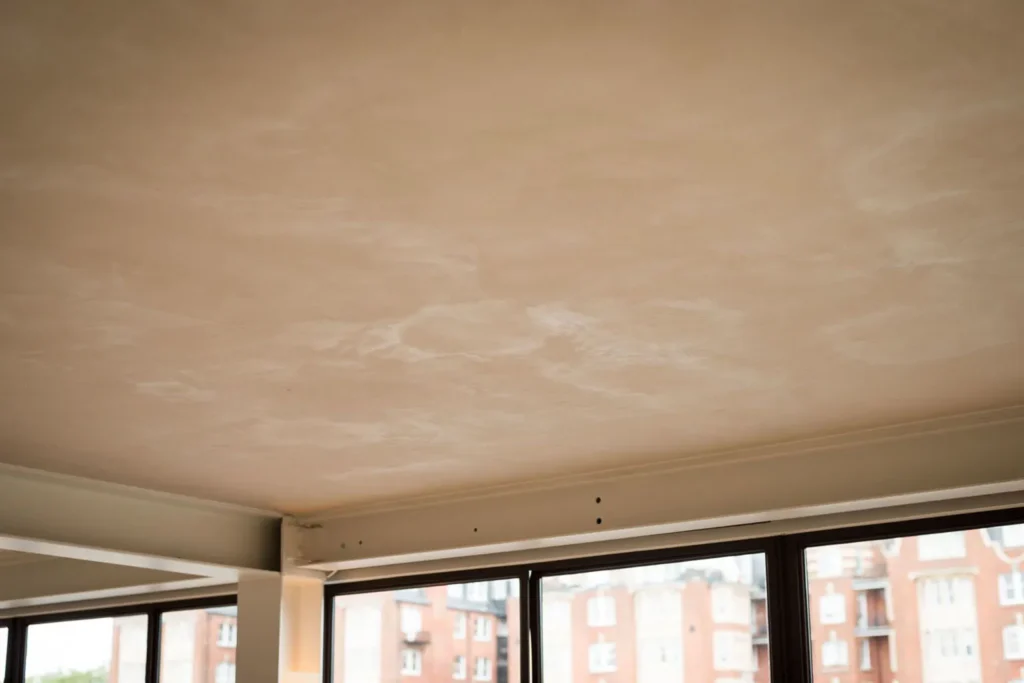
Professional ceiling re-skimming removes outdated textures and creates clean, contemporary finishes throughout your home. Artex patterns, stippled surfaces, and swirl textures all respond to expert skimming that delivers flat, smooth ceilings. Skilled plasterers work methodically overhead, ensuring even coverage without joins or imperfections — ceilings that look right and make decorating straightforward.

Patch repair skimming blends seamlessly into existing surfaces, making damage invisible without re-plastering entire walls. Holes, cracks, dents, and damaged sections get properly filled, keyed, and skim coated to match surrounding plaster exactly. Skilled plasterers feather edges, match textures, and finish patches so they disappear completely — repairs that stay hidden under any decorative finish you apply.
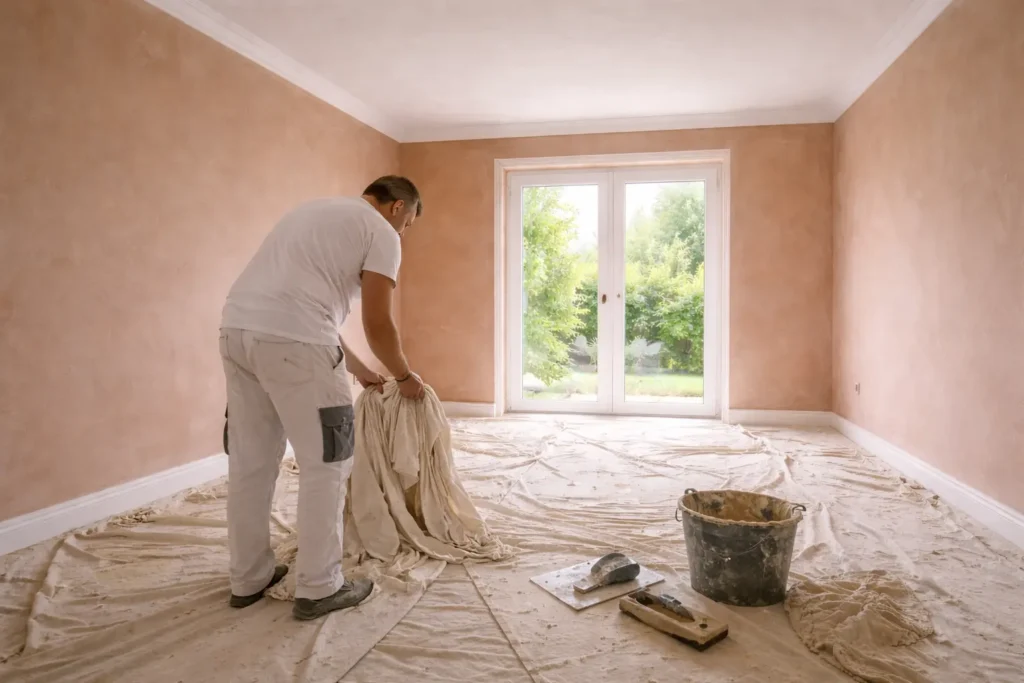
Finishing new plasterboard requires specialist technique that creates invisible joints and smooth surfaces. Extensions, conversions, and renovation projects need professional taping and skim coating to transform raw boards into decoration-ready walls. Experienced plasterers ensure seamless results — no visible joins, no cracking at corners, just flawless finishes throughout.
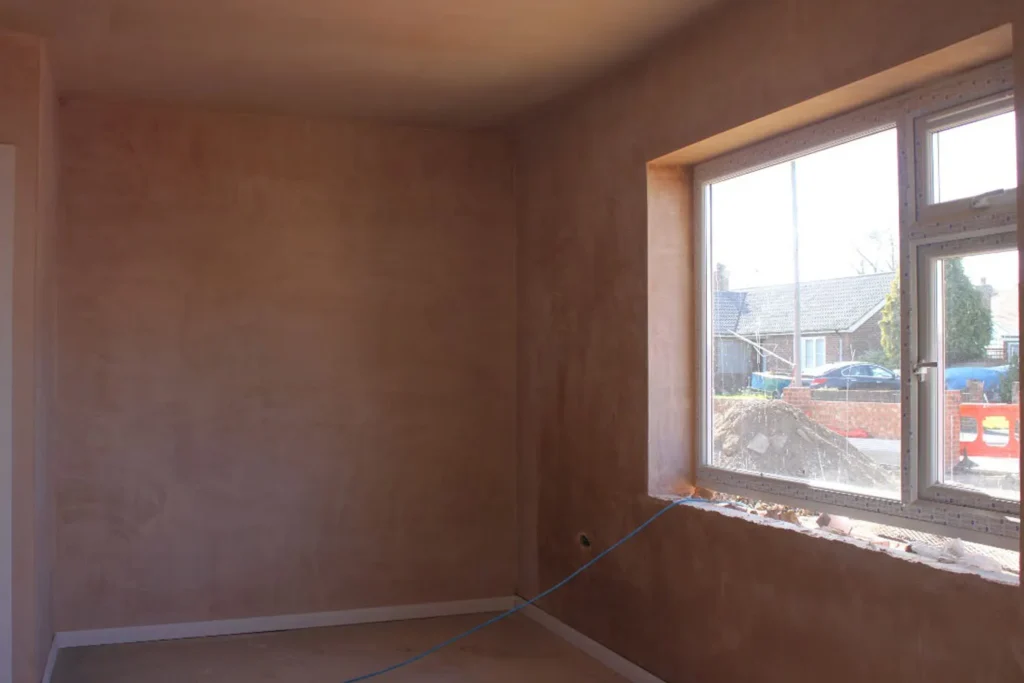
Full room skimming transforms entire spaces with consistent smooth finishes across all walls and ceilings. Complete re-plastering creates uniform surfaces throughout — no mismatched textures, no patchy areas, just seamless results from floor to ceiling. Professional plasterers work room by room, ensuring consistent coverage and quality finishing that makes decorating straightforward and results impressive.
Skimming looks easy until you try it yourself. Here’s the trade knowledge behind our consistently smooth finishes across Clifton-upon-Dunsmore.
From solid walls near Brinklow Village to cavity construction around Broad Street and board systems toward The Green, we’ve worked on Clifton-upon-Dunsmore’s full housing spectrum. That experience builds preparation instincts that speed assessment and prevent mistakes.
Re-skimming old walls, smoothing over textured ceilings, finishing new extension boards, blending repairs into existing surfaces — different starting points need different approaches. We assess properly before mixing any plaster, ensuring preparation matches what Clifton-upon-Dunsmore walls actually need.
Most Clifton-upon-Dunsmore homes are stone cottages or village houses with 2.3m to 2.6m (7.5ft – 8.5ft) ceilings. Working continuously on these property types develops pattern recognition — spotting preparation requirements quickly based on accumulated experience.
Your message connects straight to the local plasterer — someone who can talk sensibly about existing surfaces, preparation requirements, and what’s actually involved in achieving smooth walls. No script readers, just trade knowledge.
They’ll ask practical questions — what’s on the walls now, how many rooms, any known problems. Assessment timing gets arranged based on availability, ensuring proper site evaluation before providing detailed quotations.
Wall inspection covers practical concerns — is the existing plaster sound, does suction vary, are there damp issues, what’s been done before. You’ll understand preparation requirements clearly. Pricing reflects real surface condition.
Jobs get completed properly — thorough preparation, consistent application, finishing while timing allows. Work areas receive full protection, and thorough tidying follows completion. You receive specific guidance about drying requirements, mist coating, and when full decoration can begin.
Walls and plastering raise plenty of questions — how long it takes, what preparation involves, when you can paint. Here’s the straight answers to what most people ask about skimming.
Timing depends on room size, surface condition, and preparation needs. A standard bedroom with sound walls typically takes one day — preparation morning, first coat midday, second coat afternoon. Rooms needing extensive prep work or multiple problem areas take longer. Ceilings add time. You’ll get accurate duration estimates after wall assessment.
Surface condition governs preparation requirements. Well-bonded existing plaster takes skim coats directly. Blown sections need removal. Thick previous coats sometimes require stripping. Assessment identifies what your walls actually need rather than assuming worst-case scenarios.
Skim coats are thin finish layers — 2-3mm typically — applied over existing surfaces to create smooth walls. Plastering covers heavier applications including base coats on masonry, render work, or building depth. Most domestic work involves skimming existing plaster rather than full replastering.
Depends on the paint situation. Thin matt emulsion takes skim after keying preparation. Thick coatings, gloss finishes, or silk paint prevent proper adhesion — usually needing removal or bonding agent application. Assessment identifies requirements for your specific surfaces.
New plaster needs drying time before paint. Surface usually appears dry within 2-4 days, but complete curing takes 2-3 weeks depending on thickness and ventilation. Mist coat with watered-down emulsion before proper painting — rushing risks adhesion failures.
Fill out the form or call now to speak directly to the plasterer covering your area. No call centres, no delays – just clear answers and fast action.
Your details are safe – we only use them to respond to your enquiry
Professional skimming operates throughout Clifton-upon-Dunsmore. Local knowledge of housing types, construction methods, and wall characteristics that determine preparation needs and finishing approaches.