
Rough walls transformed into smooth, paintable surfaces. Proper skimming throughout Bradgate — surfaces assessed correctly, prepared thoroughly, finished to standards that show under any light.
Re-skimming a room should be straightforward, but the platform approach complicates everything. Post on Bark and suddenly you’re managing multiple quotes, juggling phone calls, and trying to work out who’s genuine. Direct contact with one trusted plasterer cuts through all that.
We’ve simplified the whole process.
Bradgate has one dedicated plasterer handling skimming. Direct contact means no delays — you speak to the tradesman who’ll assess your walls, provide honest pricing, and deliver professional results.
Skimming addresses different wall and ceiling conditions. New plasterboard finishing differs from renovation re-coating, and each surface type requires appropriate preparation — proper evaluation ensures smooth, lasting results ready for any decorative finish.
Take a look at what we do below. If you think we’re a good match for your walls, get in touch. If not, no hard feelings — thanks for stopping by.

Professional wall skimming delivers the smooth finish that transforms how rooms look and feel. Rough plaster, textured surfaces, and patchy walls disappear beneath expertly applied skim coats, creating perfect bases for paint or wallpaper. Experienced plasterers prepare surfaces properly, apply consistent coverage, and finish to high standards — leaving walls flat, smooth, and ready for whatever decorative finish you choose.
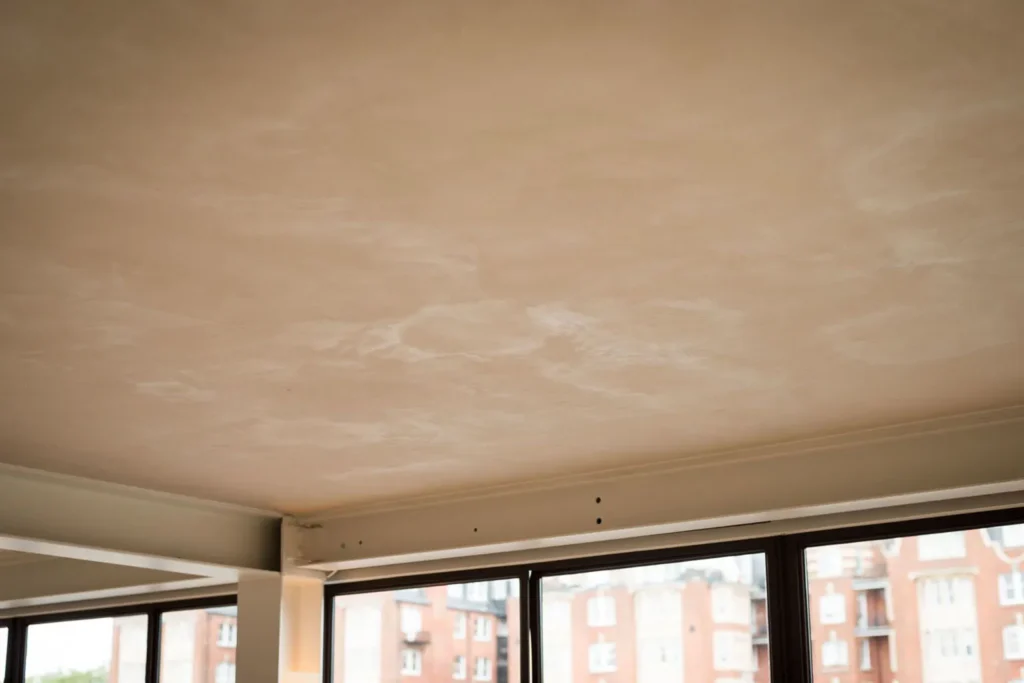
Expert ceiling skimming handles textured surfaces that paint alone can’t fix. Artex patterns, stippled finishes, and rough plaster need professional skim coating to create flat, contemporary ceilings. Skilled tradesmen prepare surfaces correctly, apply even coverage overhead, and finish to high standards — ceilings transformed and ready for decoration.

Targeted repair skimming handles damage efficiently without extensive disruption or cost. Holes from fixtures, cracks from settlement, and impact damage all respond to professional patching that blends invisibly. Skilled plasterers feather edges, match textures, and finish seamlessly — repairs that stay hidden and restore walls to consistent smooth finishes.
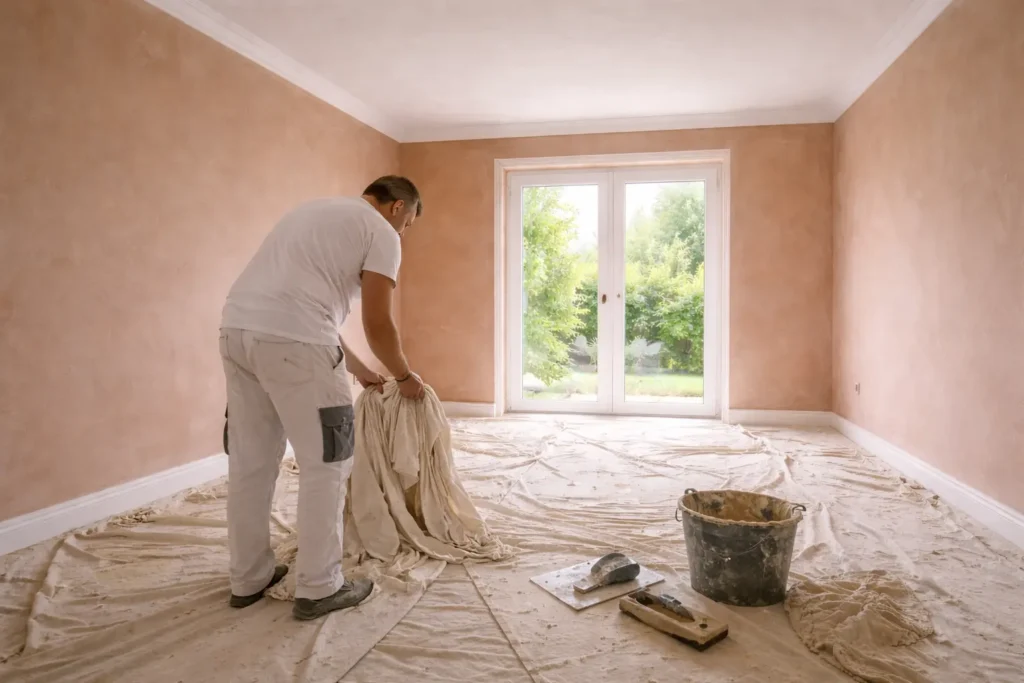
Finishing new plasterboard requires specialist technique that creates invisible joints and smooth surfaces. Extensions, conversions, and renovation projects need professional taping and skim coating to transform raw boards into decoration-ready walls. Experienced plasterers ensure seamless results — no visible joins, no cracking at corners, just flawless finishes throughout.
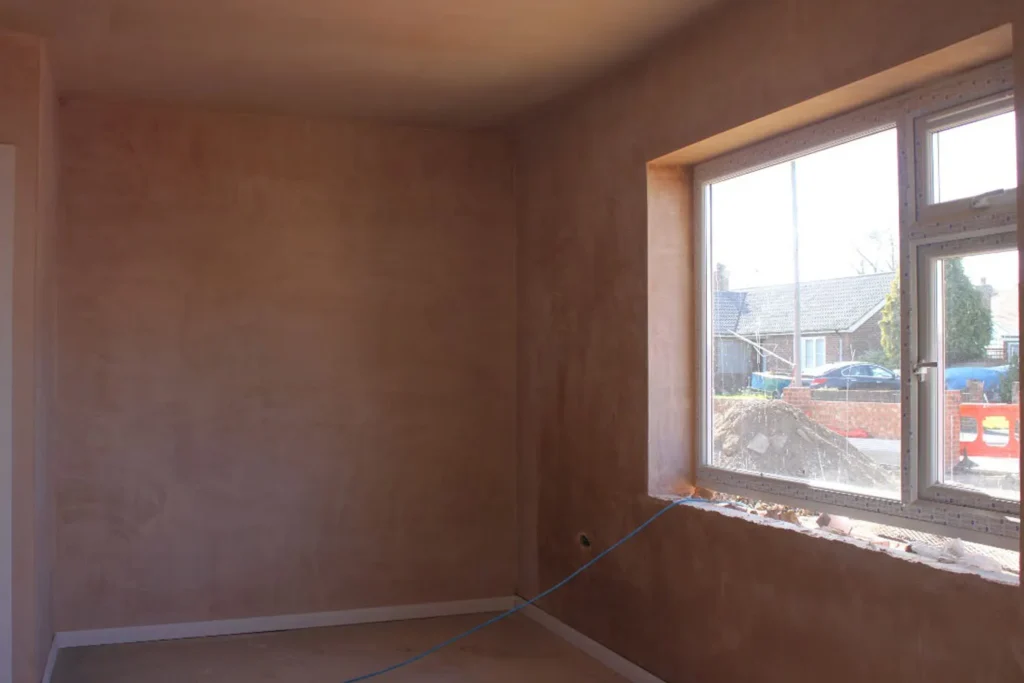
Full room re-plastering delivers complete makeovers with consistent smooth surfaces from floor to ceiling. When walls and ceilings all need work, comprehensive skimming ensures unified finishes throughout — same texture everywhere, seamless results, quality finishing. Skilled tradesmen transform entire rooms efficiently, creating spaces ready for any decorative treatment.
Smooth walls aren’t luck — they’re preparation meeting technique meeting timing. Here’s what goes into our skimming across Bradgate.
Plastering from Magna Science Centre through Wentworth Woodhouse to Clifton Park Museum builds understanding of what Bradgate walls actually contain. Old lime that’s gone powdery, hard gypsum that’s cracked with movement, board that’s absorbed moisture — recognising conditions fast comes from local repetition.
Suction that varies across a single wall, corners where old meets new, areas where previous coats are failing — these complications appear constantly. Solving them properly across Bradgate separates lasting finishes from early failures.
Properties throughout Bradgate are predominantly inter-war semis and victorian terraces, ceilings 2.5m to 2.7m (8.2ft – 8.9ft). Concentrated experience on this housing stock builds deep understanding — not textbook knowledge, but hands-on familiarity with how these specific walls behave.
Your call goes straight to the local tradesman covering Bradgate — someone who can discuss existing wall types, explain preparation options, and give honest expectations about what’s needed for smooth, lasting finishes.
Discussion focuses on understanding your situation — what the walls look like now, what you want them to become, any previous plastering issues. Assessment gets arranged at suitable timing to check surfaces firsthand before quoting.
On-site assessment covers thorough wall checking — structural soundness, surface adhesion, absorption rates, damp indicators. You’ll understand what preparation’s needed before skimming begins. Clear quotes follow actual site evaluation.
Work happens systematically — thorough preparation, even coating, skilled finishing while plaster’s workable. Protection throughout, cleanup after. You’ll know specific drying times, when mist coat application should happen, and how soon full decoration can begin.
The usual skimming queries — how walls get prepared, how long it takes, when paint goes on. Straightforward answers, no jargon.
Duration depends on what the walls need, not just room dimensions. Sound surfaces needing simple re-skimming complete faster than blown plaster requiring strip-back. Standard bedroom typically takes a day on good walls, longer with preparation complications. You’ll receive realistic timing after surface inspection.
Surface condition governs preparation requirements. Well-bonded existing plaster takes skim coats directly. Blown sections need removal. Thick previous coats sometimes require stripping. Assessment identifies what your walls actually need rather than assuming worst-case scenarios.
Skimming applies thin finish layers over existing prepared surfaces. Plastering covers broader scope — base coats on masonry, render application, building depth. Typical home work involves skim finishing over existing plaster rather than full plastering systems from bare walls.
Some painted walls skim over, others need work first. Light matt emulsion on sound plaster takes skim after keying. Thick paint, gloss finishes, or silk coatings create adhesion problems — often needing removal or bonding preparation. Assessment determines approach.
Drying depends on thickness, ventilation, temperature. Surface usually ready within 2-4 days for mist coating, complete curing takes longer. Diluted emulsion first seals new plaster properly. Early decoration causes adhesion problems.
Fill out the form or call now to speak directly to the plasterer covering your area. No call centres, no delays – just clear answers and fast action.
Your details are safe – we only use them to respond to your enquiry
Skimming work covers the complete Bradgate region. Local understanding of property construction, typical plaster conditions, and preparation methods that suit these specific housing types.