
Paint shows everything underneath — good prep or bad, flat walls or rippled. Professional skimming throughout Warsop that creates surfaces worth decorating.
Skimming quotes vary wildly across platforms because pricing depends on who needs the work. You end up comparing apples with oranges while plasterers compete on price rather than quality. One reliable tradesman with fair, consistent rates makes more sense.
Our approach is more straightforward.
One reliable plasterer handles skimming across Warsop. Your call or form goes straight to the person who’ll actually do the work at your home — no intermediaries, no quote comparisons, just direct professional contact.
Professional wall skimming delivers the smooth finish that transforms how rooms look and feel. Rough plaster, textured surfaces, and patchy walls disappear beneath expertly applied skim coats, creating perfect bases for paint or wallpaper. Experienced plasterers prepare surfaces properly, apply consistent coverage, and finish to high standards — leaving walls flat, smooth, and ready for whatever decorative finish you choose.
Read the breakdown below and decide if we handle your type of skimming. If we do, get in contact and we’ll respond promptly. If we don’t, that’s fine — appreciate you stopping by.

Professional wall re-skimming solves surface problems that paint alone can’t fix. Rough textures, visible repairs, and uneven plaster need proper skim coating to create smooth, consistent walls. Skilled tradesmen assess conditions, prepare surfaces correctly, and apply quality finishes that hide imperfections completely — delivering walls ready for any decorative treatment you’re planning.
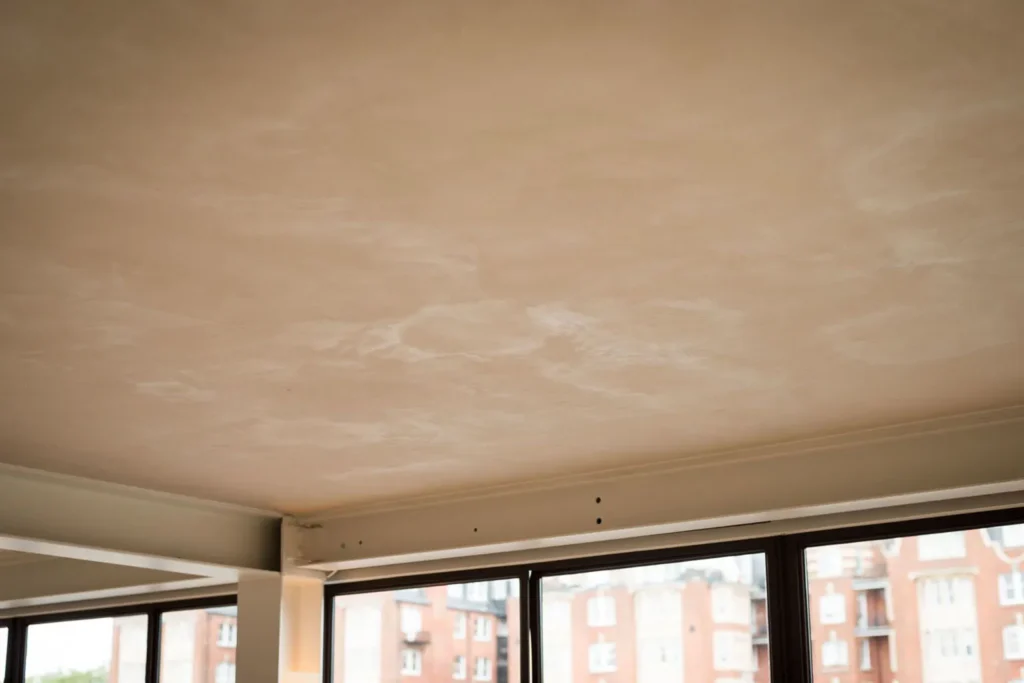
Professional ceiling finishes start with expert skimming that transforms rough or textured surfaces. Outdated Artex, damaged plaster, and uneven areas disappear beneath smooth skim coats applied by skilled tradesmen. Working overhead requires specific technique and experience — delivering flat ceilings that reflect light evenly and make rooms feel fresh.

Professional patch plastering fixes localised damage without the disruption of full re-skimming. Impact holes, cable chases, removed fixtures, and cracked sections respond to targeted repair work that blends invisibly with existing surfaces. Experienced plasterers match textures, feather edges, and finish seamlessly — patches that paint over perfectly and stay hidden permanently.
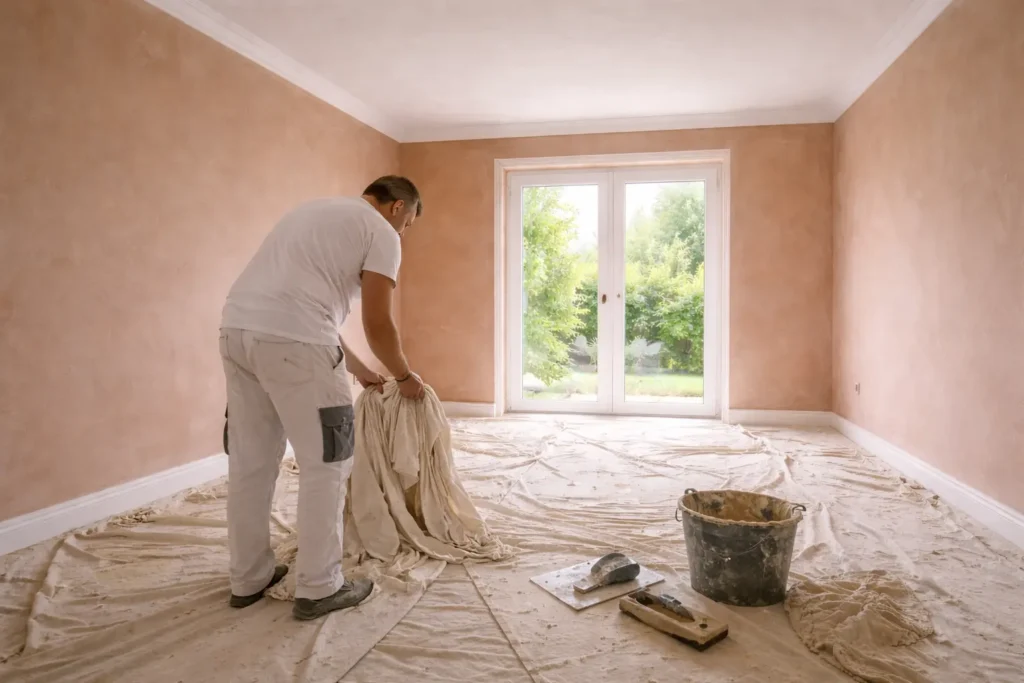
New extension finishing requires quality plastering that transforms raw plasterboard into smooth living spaces. Professional taping, jointing, and skim coating create seamless walls and ceilings throughout your project. Experienced tradesmen work systematically — proper joint preparation, consistent application, clean finishing — delivering results that complete your build to high standards.
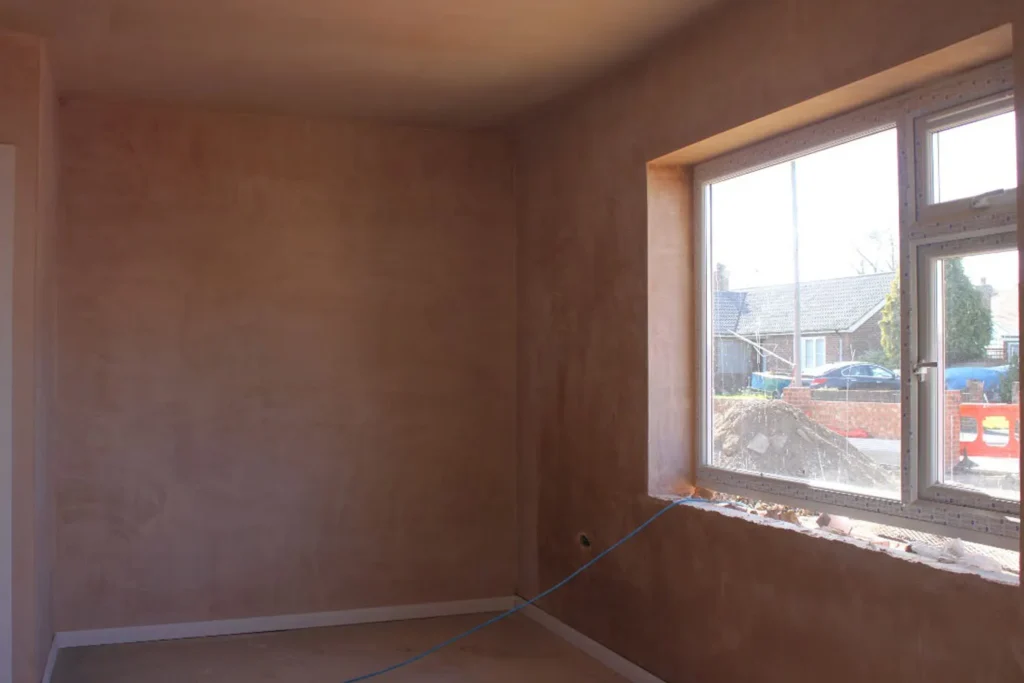
Full room plastering unifies surfaces with consistent smooth finishes across walls and ceilings together. Comprehensive re-skimming eliminates texture variations and patchy areas — delivering seamless results throughout. Skilled tradesmen work room by room, ensuring even quality and professional finishing that transforms spaces completely.
Cheap skimming costs more when you’re repainting rippled walls a year later. Here’s the detail on our quality-first approach across Warsop.
From solid walls near Market Place to cavity construction around Church Street and board systems toward Sherwood Forest nearby, we’ve worked on Warsop’s full housing spectrum. That experience builds preparation instincts that speed assessment and prevent mistakes.
Walls after wallpaper stripping that stripped plaster too, ceilings with nicotine staining beneath, patches where old and new plaster meet — problem surfaces need solving before skimming starts. We find the problems first throughout Warsop.
Most Warsop homes are victorian terraced houses or inter-war houses with 2.4m to 2.6m (7.9ft – 8.5ft) ceilings. Working continuously on these property types develops pattern recognition — spotting preparation requirements quickly based on accumulated experience.
Your message connects straight to the local plasterer — someone who can talk sensibly about existing surfaces, preparation requirements, and what’s actually involved in achieving smooth walls. No script readers, just trade knowledge.
They’ll ask practical questions — what’s on the walls now, how many rooms, any known problems. Assessment timing gets arranged based on availability, ensuring proper site evaluation before providing detailed quotations.
Wall inspection covers practical concerns — is the existing plaster sound, does suction vary, are there damp issues, what’s been done before. You’ll understand preparation requirements clearly. Pricing reflects real surface condition.
Plastering gets completed properly — correct preparation, consistent application, careful finishing. Protection covers work areas throughout, and thorough tidying follows. Clear guidance covers drying stages, when emulsion misting should happen, and realistic decoration timelines.
Walls and plastering raise plenty of questions — how long it takes, what preparation involves, when you can paint. Here’s the straight answers to what most people ask about skimming.
Skimming a standard room takes roughly a day on walls in reasonable condition. Poor surfaces needing bonding, repairs, or extensive preparation add significant time. Ceilings alongside walls extend the schedule. Accurate duration estimates follow from proper wall assessment.
It depends on current wall condition. Well-bonded existing plaster takes skim coats directly after proper keying. Delaminated areas need stripping. Multiple thick coats may require removal. Assessment determines what preparation your specific walls actually need.
Skimming means thin finish coats over prepared existing surfaces. Full plastering includes base coats on brick, render application, depth building. Typical home jobs involve re-skimming existing plaster rather than plastering from scratch — thinner applications, quicker completion.
Some painted walls skim over, others need work first. Light matt emulsion on sound plaster takes skim after keying. Thick paint, gloss finishes, or silk coatings create adhesion problems — often needing removal or bonding preparation. Assessment determines approach.
New plaster needs drying time before paint. Surface usually appears dry within 2-4 days, but complete curing takes 2-3 weeks depending on thickness and ventilation. Mist coat with watered-down emulsion before proper painting — rushing risks adhesion failures.
Fill out the form or call now to speak directly to the plasterer covering your area. No call centres, no delays – just clear answers and fast action.
Your details are safe – we only use them to respond to your enquiry
Services extend throughout Warsop for quality plastering. Local understanding of housing stock, original construction types, and preparation methods that achieve smooth, lasting finishes.