
Walls that take paint properly start with proper skimming. Flat, smooth finishes across Linton — preparation done right, coats applied evenly, surfaces ready for whatever decoration you’re planning.
Skimming is skilled work that deserves a skilled tradesman, not the cheapest bidder from a platform race to the bottom. When quality matters more than saving twenty quid, direct contact with a proven plasterer makes sense.
Professional skimming works differently here.
Linton has one dedicated skimming specialist. When your walls need refinishing, you contact them directly — and that’s who turns up to deliver smooth, paintable surfaces. Simple, reliable, quality-focused.
Skimming work varies significantly depending on existing conditions. Sound plaster just needs re-coating, compromised areas need stripping back, and new boards need proper preparation — identifying the starting point ensures professional finishes.
See if what we offer below matches the finish you’re looking for. If it does, contact us directly. If it doesn’t, no problem at all — appreciate you checking us out.

Re-skimming walls creates the perfect foundation for any decorative finish you’re planning. Old plaster, damaged surfaces, and uneven textures disappear beneath smooth skim coats applied by experienced local plasterers. Proper technique ensures consistent coverage, clean edges, and durable results — walls transformed from rough to ready, making your decorating project straightforward.
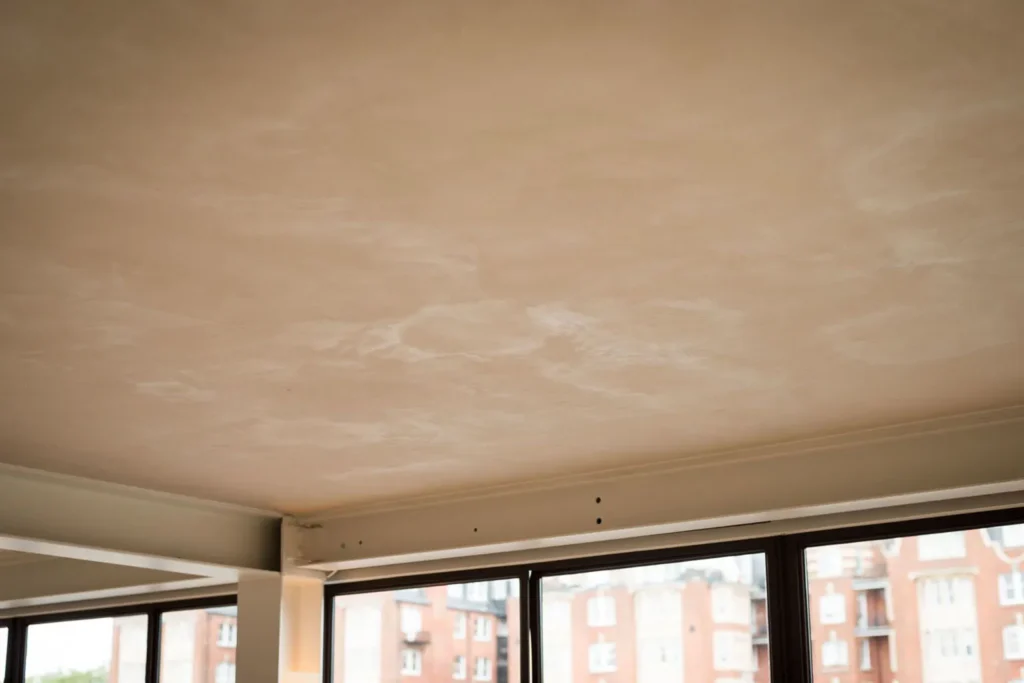
Professional ceiling re-skimming removes outdated textures and creates clean, contemporary finishes throughout your home. Artex patterns, stippled surfaces, and swirl textures all respond to expert skimming that delivers flat, smooth ceilings. Skilled plasterers work methodically overhead, ensuring even coverage without joins or imperfections — ceilings that look right and make decorating straightforward.

Expert plaster repairs blend invisibly into existing wall surfaces through professional skimming technique. Damaged sections get properly prepared, filled, and skim coated with careful attention to edge feathering. Texture matching ensures patches disappear completely — targeted repairs that restore walls efficiently without full re-skimming costs.
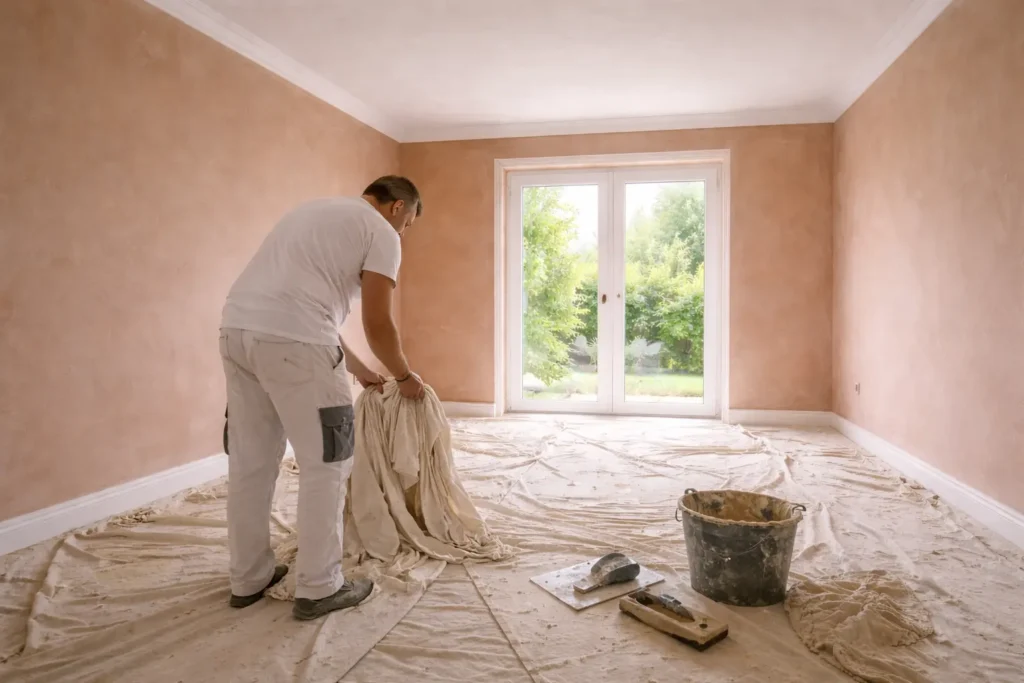
Quality plasterboard finishing completes construction projects with smooth, decoration-ready surfaces throughout. Extensions, loft rooms, and garage conversions all need professional taping and skimming to transform raw boards into finished walls. Skilled plasterers deliver seamless results — invisible joints, consistent coverage, professional finishing — spaces ready for decorating.
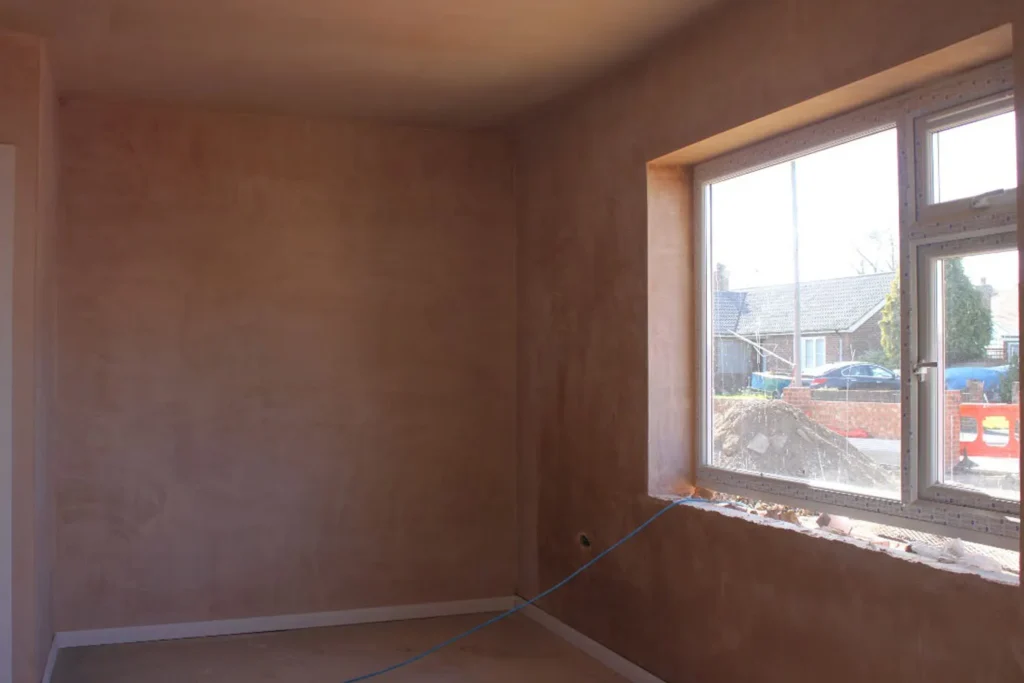
Full re-skim plastering transforms tired rooms into fresh, modern spaces with consistent finishes throughout. Walls and ceilings receive complete coverage — no patching, no texture mismatches, just smooth surfaces everywhere. Skilled plasterers work room by room, delivering unified results that make decorating straightforward and rooms feel completely renewed.
Smooth walls aren’t luck — they’re preparation meeting technique meeting timing. Here’s what goes into our skimming across Linton.
Properties near St Marys Church tend toward solid nine-inch walls with lime plaster. Toward Linton Zoo you hit more cavity construction with gypsum. Out near The Crown Inn the estates are mostly board. Knowing Linton’s building history makes preparation instinctive.
Blown plaster that sounds hollow, old distemper that kills adhesion, suction differences between old and new surfaces — these problems sink skimming jobs. We identify them first throughout Linton, fixing foundations before applying finishes.
Properties throughout Linton are predominantly georgian townhouses and victorian terraces, ceilings 2.6m to 2.9m (8.5ft – 9.5ft). Concentrated experience on this housing stock builds deep understanding — not textbook knowledge, but hands-on familiarity with how these specific walls behave.
When you get in touch, the tradesman answers — same person who’ll assess your surfaces and apply the skim coats. Conversations about wall condition, preparation needs, and finishing standards happen with someone qualified to give proper answers.
Discussion focuses on understanding your situation — what the walls look like now, what you want them to become, any previous plastering issues. Assessment gets arranged at suitable timing to check surfaces firsthand before quoting.
Site visits involve genuine wall inspection — checking for blown plaster, assessing suction, noting previous repairs, identifying preparation requirements. You’ll understand what needs doing before skimming starts. Quotes reflect actual surface condition and realistic preparation time.
Work happens methodically — proper preparation, controlled application, careful finishing while the plaster’s still workable. Dust sheets protect your belongings, and complete cleanup follows. You’ll know exact drying times, when emulsion misting should happen, and how soon proper decoration can start.
The common skimming questions — how surfaces get prepared, how long jobs take, when painting can happen. Straight answers, kept simple.
Completion time depends heavily on wall condition. Average bedroom on sound plaster takes roughly a day. Poor surfaces needing preparation work take longer — sometimes considerably. Ceiling work adds time. Assessment reveals what your walls actually require.
Not automatically — it depends what’s underneath. Good plaster that’s firmly attached just needs preparing and coating. Problem areas — hollow sections, loose coats, heavy buildup — need stripping. Assessment determines requirements for your specific walls.
Skim coats are thin finish applications — 2-3mm — creating smooth surfaces over existing plaster. Plastering covers broader scope including base coats, render application, depth building on masonry. Most domestic work involves re-skimming rather than complete replastering.
Some painted walls skim directly, others need preparation. Matt emulsion over sound plaster takes skim after keying. Gloss, silk, or heavy paint buildup creates adhesion issues — often requiring stripping or bonding agent application. Assessment identifies what your painted walls specifically need.
Drying varies with conditions — ventilation, temperature, coat thickness. Surface typically dries enough in 2-4 days for mist coating, though full cure takes weeks. Diluted matt emulsion first seals the surface properly. Early decoration causes paint problems.
Fill out the form or call now to speak directly to the plasterer covering your area. No call centres, no delays – just clear answers and fast action.
Your details are safe – we only use them to respond to your enquiry
Skimming work extends across the complete Linton region. Local expertise in housing stock characteristics, wall behaviours, and preparation methods that deliver proper results on these surfaces.